Multipoint Locks, Lift-Up Handles, Hooks, and Rollers
Check whether a smart lock can complete a multipoint sequence or whether lifting the handle and engaging the bolts must remain manual.
Jump to a section
A smart lock can fit over a cylinder and still leave the door only partly secured. Multipoint hardware may use a handle, key, hooks, rollers, auxiliary latches, and a main deadbolt in a required sequence. Check the sequence from an unlocked door to a fully secured door, then check the reverse sequence for entry.
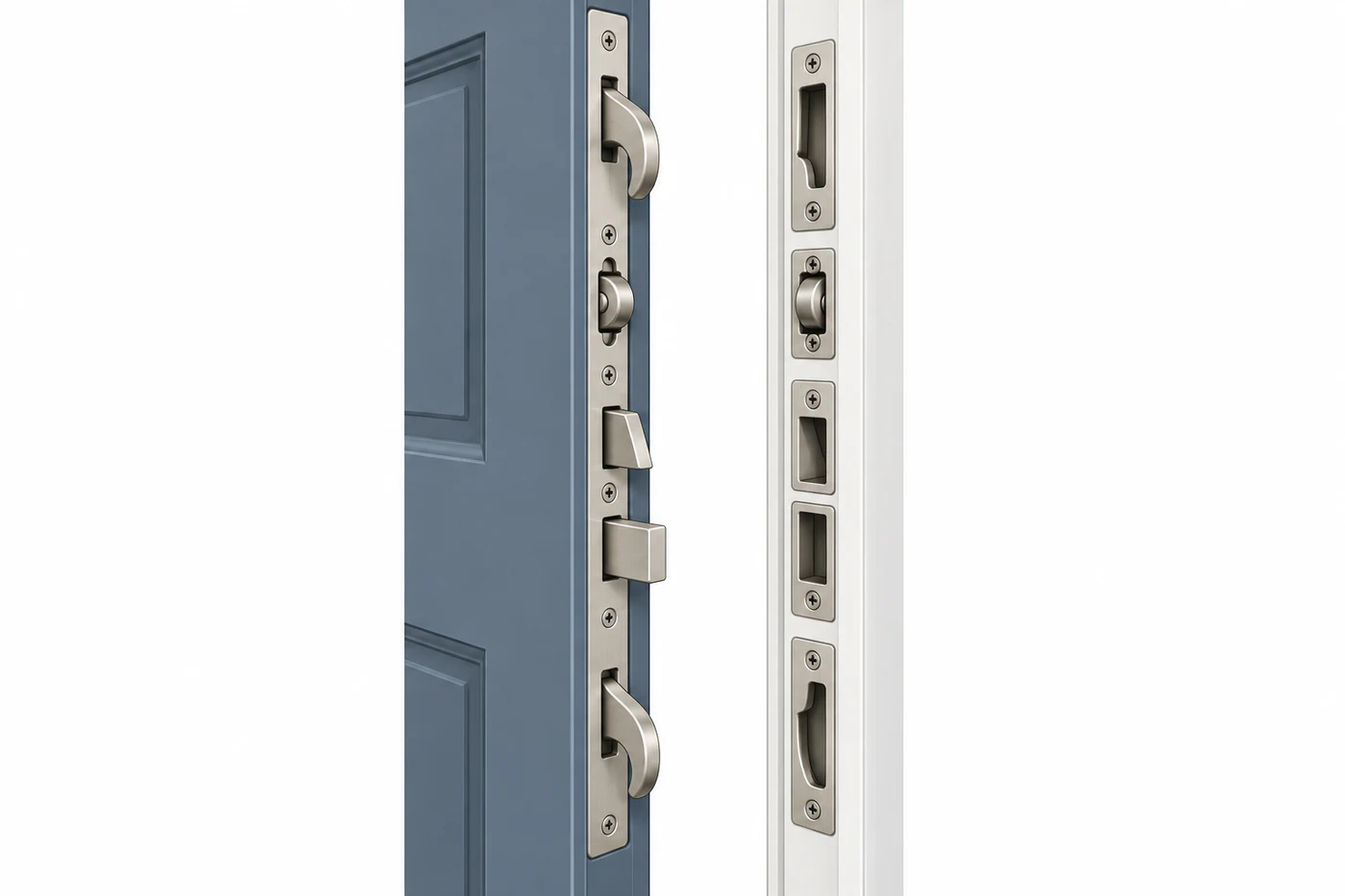
Schematic inventory of distinct possible locking points; layouts and the way each point operates vary by lock.
Map the complete sequence
With the door open, observe the ordinary operation without forcing the handle or key. Record each movement:
- Close the door and note whether any latches or bolts engage automatically.
- Raise or lower the handle and note whether hooks or rollers move.
- Turn the key and note whether it throws the main deadbolt or performs another action.
- Reverse the process to open the door, including any key or handle movement.
A label such as “three-point” does not tell you which steps a motor performs. Hooks, rollers, and bolts may engage automatically, through the handle, or through the key. The installed lock’s exact model and sequence matter.
A key turn is not a handle lift
FUHR describes its multisafe 856 as lever-operated: the handle operates the multipoint mechanism, then the key extends the main deadbolt. A motor that turns only the cylinder should not be assumed to raise that handle.
FUHR’s autosafe 833 is a different example. Its description says two auxiliary latches extend automatically when the door closes, while the main deadbolt remains a separate key action. These examples show that even one manufacturer describes different operating sequences across lock families; neither product description is a smart-lock compatibility verdict.
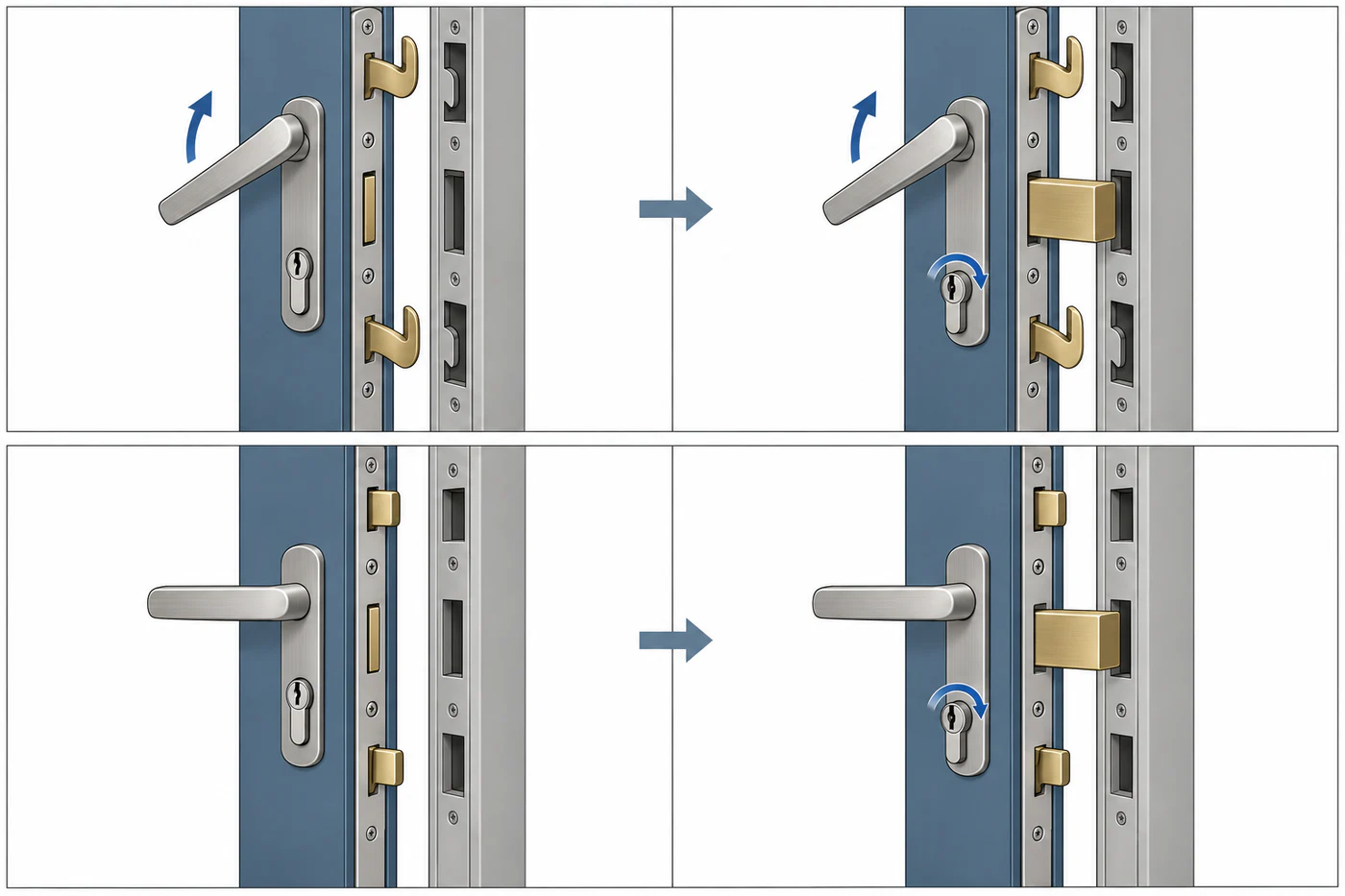
Simplified comparison of the two FUHR examples above; confirm the actual lock model and its normal operation.
Nuki’s setup guidance warns that its cited smart-lock setup cannot lift a raised handle. Its separate Smart Lock Ultra compatibility guide says the lock works regardless of how many locking turns the cylinder requires. That statement addresses turn count; it does not establish who lifts a handle or whether the device completes every locking point on a particular door. Aqara’s U200 guidance documents a Pull Spring feature for pulling a latch, but that is not evidence that it raises the handle or completes the multipoint sequence. Check the exact smart-lock model’s current documentation for the action it can perform.
Netatmo’s Europe-facing product page says its Smart Door Lock is compatible with multipoint and lift-handle systems. The page does not explain who performs the handle lift or establish a particular lock-case sequence. Treat this as a product-level claim; check the locally sold variant and complete door operation before relying on it.
Separate fit from full operation
For the named door and smart-lock variant, verify:
- whether the lock case requires a handle lift before the key turns;
- whether the device can turn the key or cylinder through the full required travel;
- whether hooks, rollers, and auxiliary bolts engage and retract;
- whether a manual step remains for locking or unlocking;
- whether auto-lock or remote functions depend on an action the device cannot perform; and
- whether inside operation and any required emergency function remain available.
If the manufacturer does not document your exact mechanism, do not treat a broad “multipoint compatible” statement as proof. Leave the result conditional and ask for confirmation using the lock-case model and sequence you recorded. The compatibility checklist provides a place to capture those details. For emergency-key or freewheel requirements, see emergency function and double clutch.
Reference material