Mortise, Latch-Only, and Turn-Cylinder Doors
Determine whether a mortise door needs a cylinder turn, latch pull, handle movement, or a different replacement path.
Jump to a section
“Mortise” describes where a lock body sits: in a pocket cut into the edge of the door. It does not describe the action a smart lock must perform. The cylinder may throw a deadbolt, a handle may retract or engage the latch, or both actions may be required.
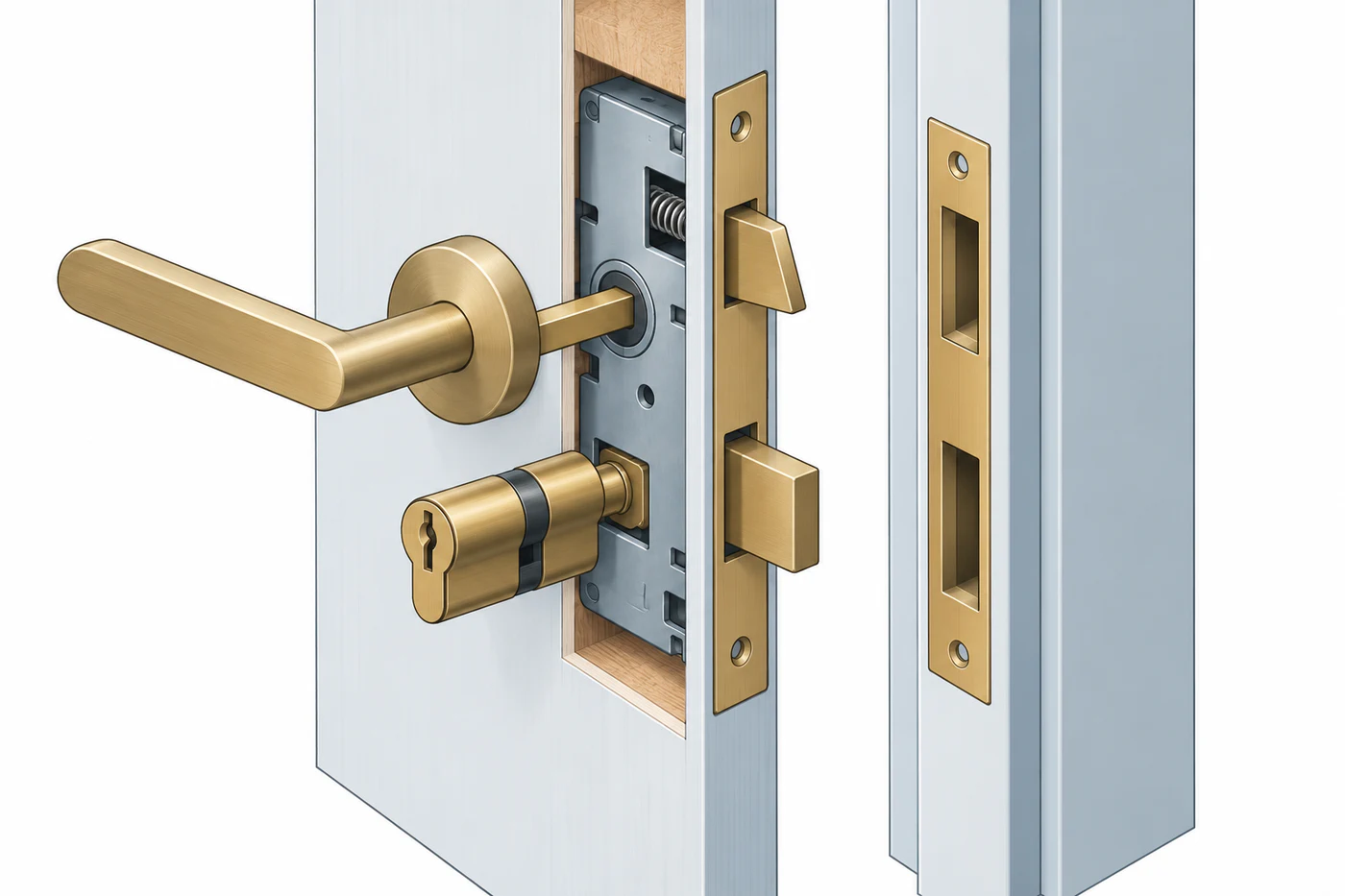
Simplified cutaway. The lock case sits inside the door edge, with the cylinder and handle spindle entering the case; layouts vary.
Identify the operating action
With the door open, use the key, handle, and thumbturn as you normally would. Note what moves and in what order:
- Turn-cylinder deadbolt: a key or thumbturn rotates the cylinder and moves the bolt.
- Latch-only action: the lock secures or releases a spring latch without a deadbolt turn.
- Handle-operated action: raising or lowering a lever changes the latch or engages additional locking points.
- Combined action: a handle movement and a key turn are both needed.
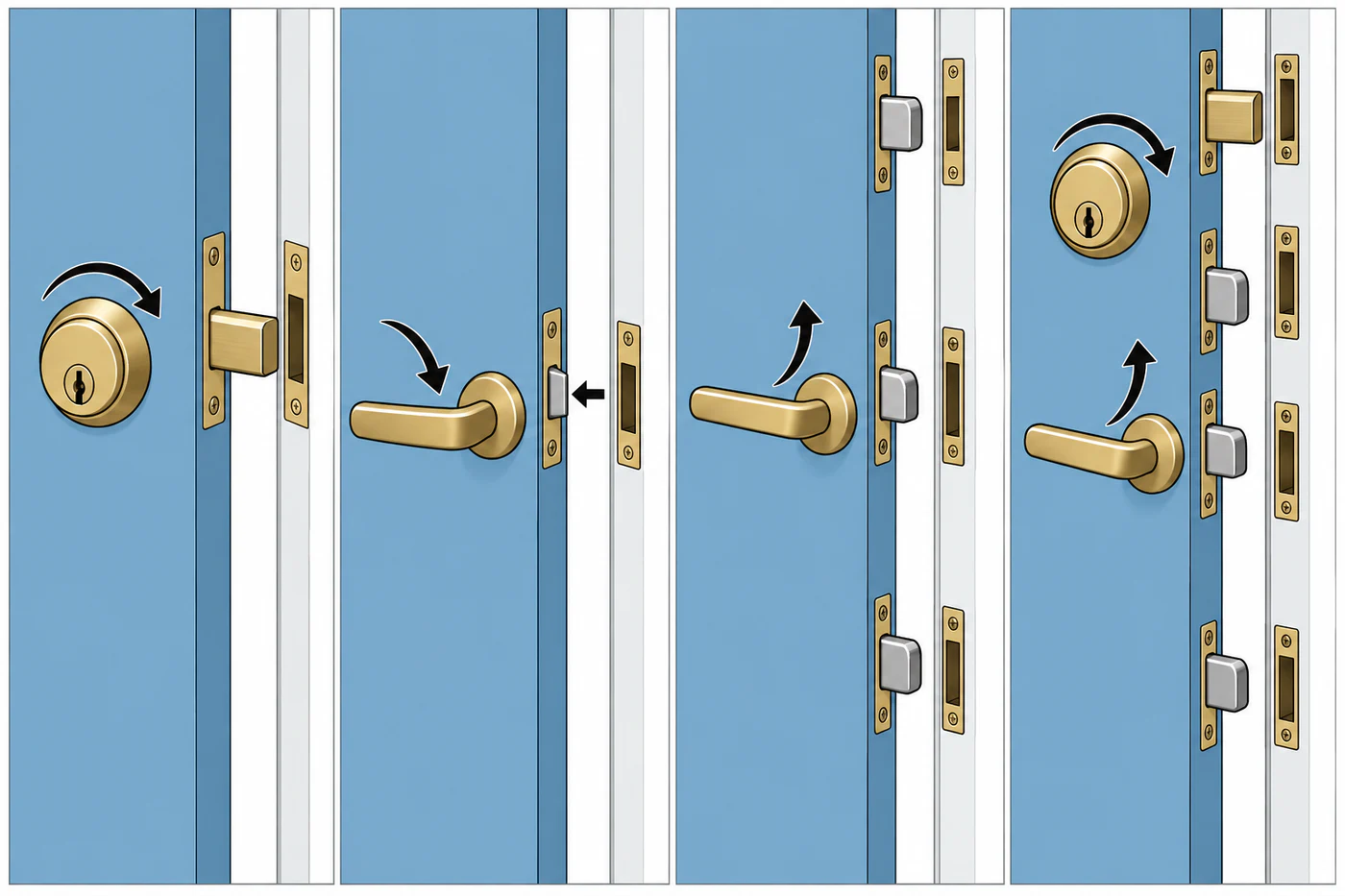
These examples show different inputs and outputs; they do not establish which sequence a specific product supports or an installed door requires.
The visible cylinder does not prove which of these actions the motor will control. Look at the door edge and record any bolts, hooks, rollers, or additional handles. If there is a separate night latch or multipoint mechanism, identify it separately.
Match the product’s supported mechanism
Aqara’s U200 manual describes requirements for its supported Euro mortise-lock path, including a listed cylinder profile and emergency function. Aqara’s installation guidance also documents a Pull Spring feature that can pull a latch on supported U200 installations. Those product statements do not establish fit with every mortise body, nor do they show that the device can raise a handle or complete every multipoint sequence.
Nuki’s Smart Lock Ultra Nordics guide, by comparison, requires deadbolt action and identifies latch-only operation as incompatible for that named product. This does not define every Nordic cylinder or smart lock; it illustrates why a product’s stated operating action matters.
Do not treat “fits a mortise lock” as equivalent to “operates the door.” Confirm the exact model’s lock-case, cylinder, mounting, latch, and deadbolt requirements. Check the product’s country-specific version and any conditions on a replacement cylinder or mounting plate.
Decide what to do with an unresolved action
If normal operation reveals only a latch and the product requires a deadbolt, a cylinder change alone may not solve the mismatch. If the door needs a handle movement, a cylinder-turning retrofit may still leave that movement manual. If a manufacturer documents a latch-pull feature, use it only within the named product’s stated scope and instructions.
Record the unresolved action and ask the manufacturer or a qualified locksmith to identify the lock body. Avoid forcing a key or handle, and do not dismantle the mortise case to infer compatibility. Continue with the multipoint and lift-up-handle guide if the door uses multiple bolts or a handle-lift sequence, or compare a conversion path when the existing mechanism is not supported.
Reference material