Emergency Function, Double Clutch, and Key Retention
Check whether an outside key can operate while a key remains inside, and distinguish that behavior from other cylinder functions.
Jump to a section
An emergency function generally lets a key operate the cylinder from one side while another key remains inserted on the other side. Some sellers call this double clutch; terminology varies, so check the exact cylinder’s documented behavior. It can matter when an inside key stays in place under a retrofit motor and someone still needs to use the outside key.
Use the manufacturer’s normal test
Nuki describes a two-key check for the cylinders used with its smart locks:
- Keep the door open and insert the inside key, leaving it at an angle.
- Insert a second key from outside.
- Try the normal locking action without forcing either key.
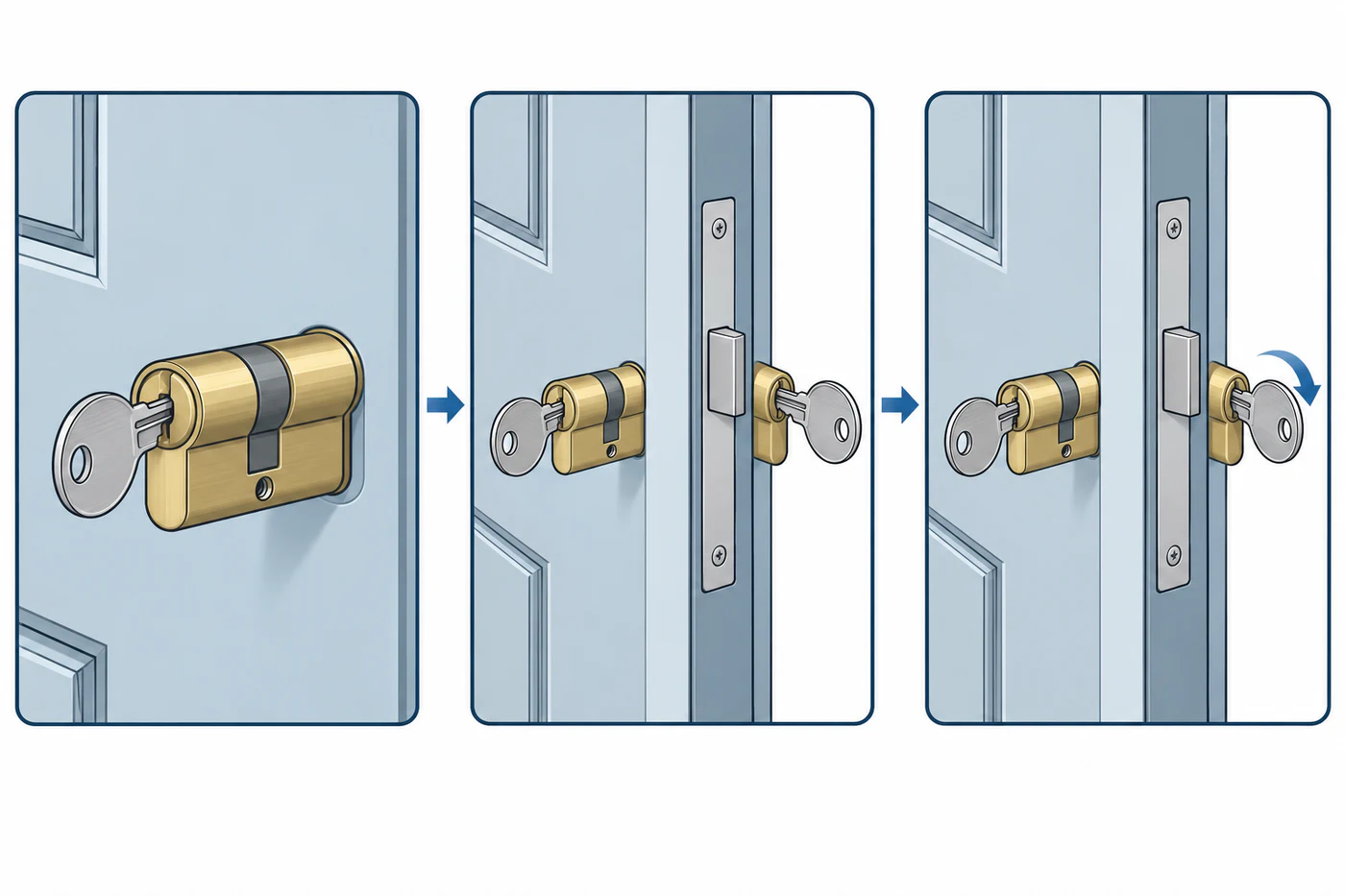
Follow the exact cylinder or smart-lock maker’s current test guidance. This schematic does not show every cylinder design.
If the keys do not operate as expected, treat the required function as unconfirmed. Follow the cylinder and smart-lock manufacturers’ instructions, and ask a locksmith whether an exact replacement or retrofit is suitable. Do not use a failed test as a reason to force the key or operate an unfamiliar lock under load.
Check what remains in the cylinder
Record whether the smart-lock arrangement leaves a key inserted inside, uses an inside thumbturn, or replaces the cylinder with a different mechanism. Check whether an outside key can still operate, whether the product’s manual override is available, and whether the exact smart-lock instructions require a particular cylinder function.
Aqara’s U200 manual, for example, names an emergency-function requirement for its supported Euro mortise configuration. That is a model-specific requirement, not a rule for all smart locks or every cylinder called Euro profile.
Emergency key operation is not freewheel behavior
Manufacturers distinguish a cylinder that allows the opposite-side key to turn from a freewheel cam used by some gear-operated or panic-lock mechanisms. dormakaba describes these as separate cylinder functions and says the cylinder requirements for a panic lock must match the lock’s certificate. An emergency-key feature alone does not prove that a cylinder satisfies a specific lock-case requirement.
Use the exact lock and cylinder documentation when a mortise, multipoint, or panic mechanism specifies a special cam or cylinder function. If the documentation is missing or the terms conflict, ask the lock maker or a qualified locksmith to identify the required function before replacing the cylinder.
Keep cylinder function separate from egress
Emergency function describes key operation across a cylinder. It does not describe every way a person can exit through the door, or prove that a lock assembly meets a UK egress classification. Those are separate questions; see UK egress standards and smart-lock compatibility.
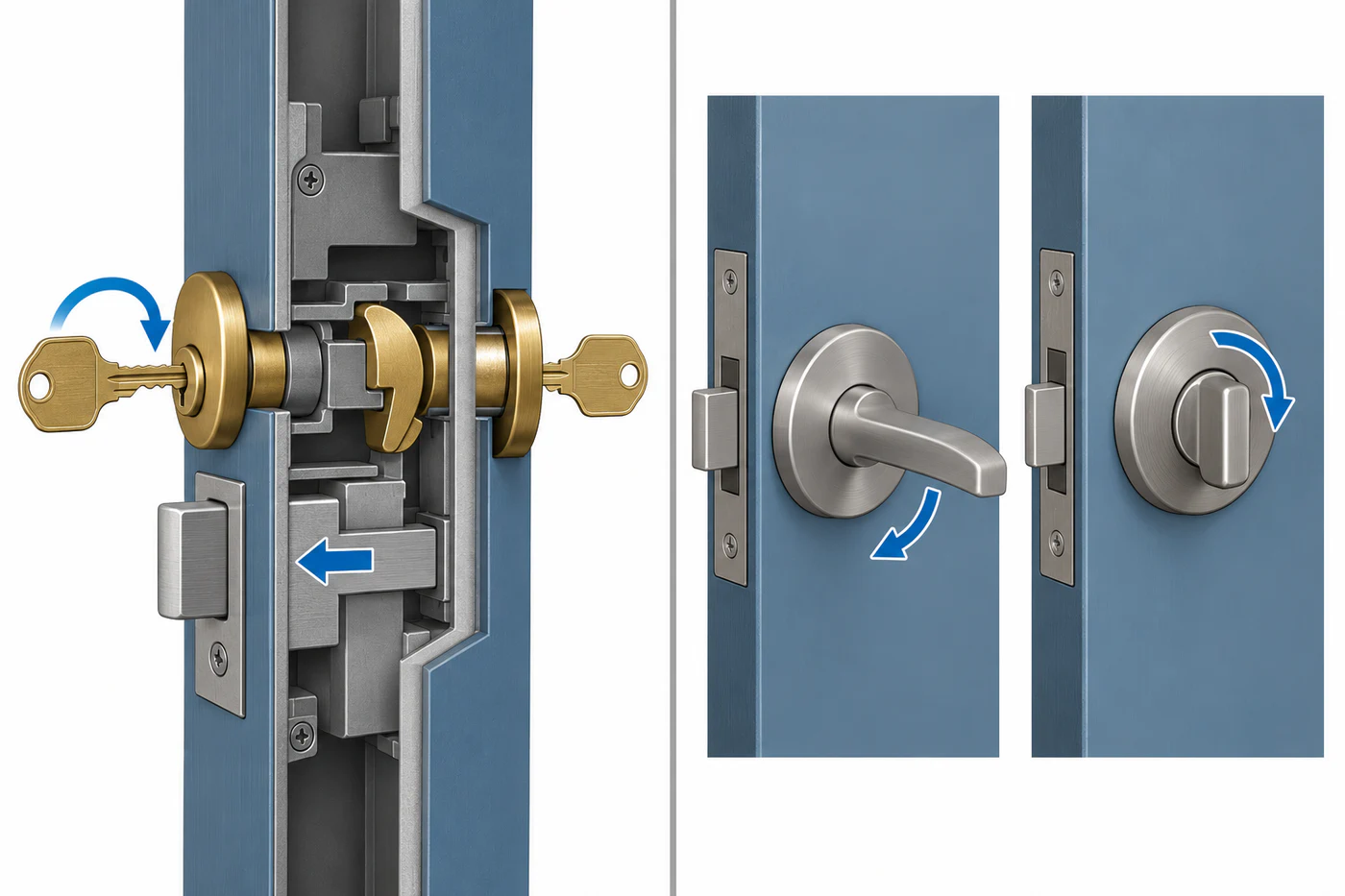
Cylinder key behavior and inside lock-assembly release are separate checks; this conceptual image is not an egress classification or certification diagram.
Reference material