UK Egress Standards and Smart-Lock Compatibility
Understand what the UK BS 3621, BS 8621, and BS 10621 lock-assembly titles describe and why they do not prove smart-lock fit.
Jump to a section
UK lock-assembly standards describe how a lock is operated from inside and outside, including whether egress requires a key. That classification is separate from whether a smart-lock motor fits a cylinder or can complete a particular door’s locking sequence.
Read the assembly-level distinction
The British Standards Institution’s current listings identify these lock-assembly scopes:
| Standard listing | Operation described by the BSI title |
|---|---|
| BS 3621:2017+A1:2024 | Key operation from both the inside and outside of the door. |
| BS 8621:2017+A1:2024 | Key operation from outside, with a handle or thumb turn from inside. |
| BS 10621:2017+A1:2024 | An assembly that can switch between normal BS 8621 operation and a secure mode in which egress is not possible. |
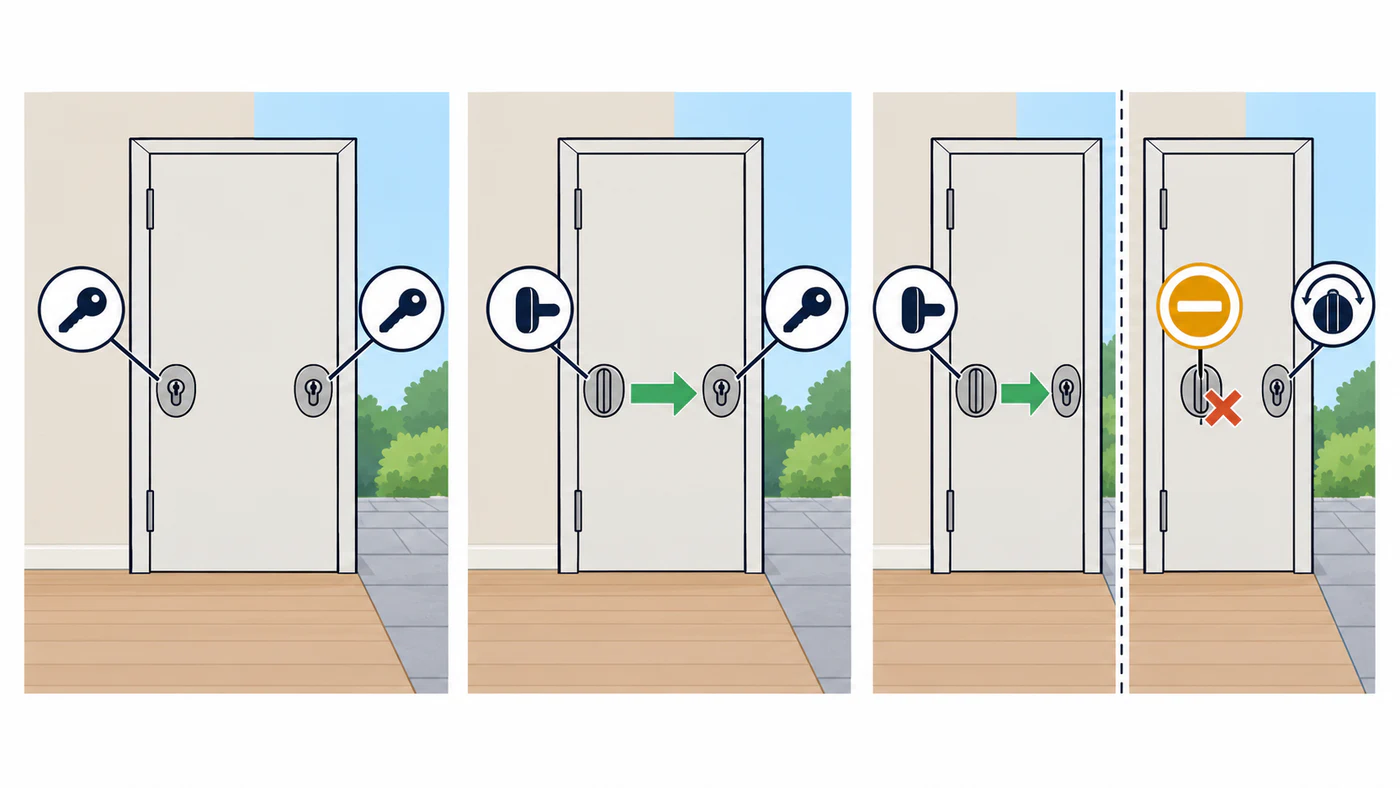
Conceptual comparison of the operation modes named in the BSI listing titles; it does not classify any particular door.
Secured by Design says a BS 10621 lock with this dual-mode feature should only be used on a property with an alternative means of escape. This is UK guidance, not a finding that a particular building meets that condition. See Secured by Design’s locks guidance.
These summaries follow the BSI listing titles; they are not a substitute for the full standard or an assessment of a building. Confirm the current edition and exact application with the responsible building professional or a qualified lock specialist before changing hardware.
Do not confuse egress with cylinder functions
Several compatibility questions can sound similar but describe different behavior:
- Lock-assembly egress: how the whole lock is released from inside.
- Cylinder emergency function: whether a key can operate from outside while another key remains inserted inside.
- Freewheel cam: a separate cylinder behavior that may be required by a gear-operated or panic mechanism.
- Smart-lock operation: whether the exact device fits and can complete the required lock and handle sequence.
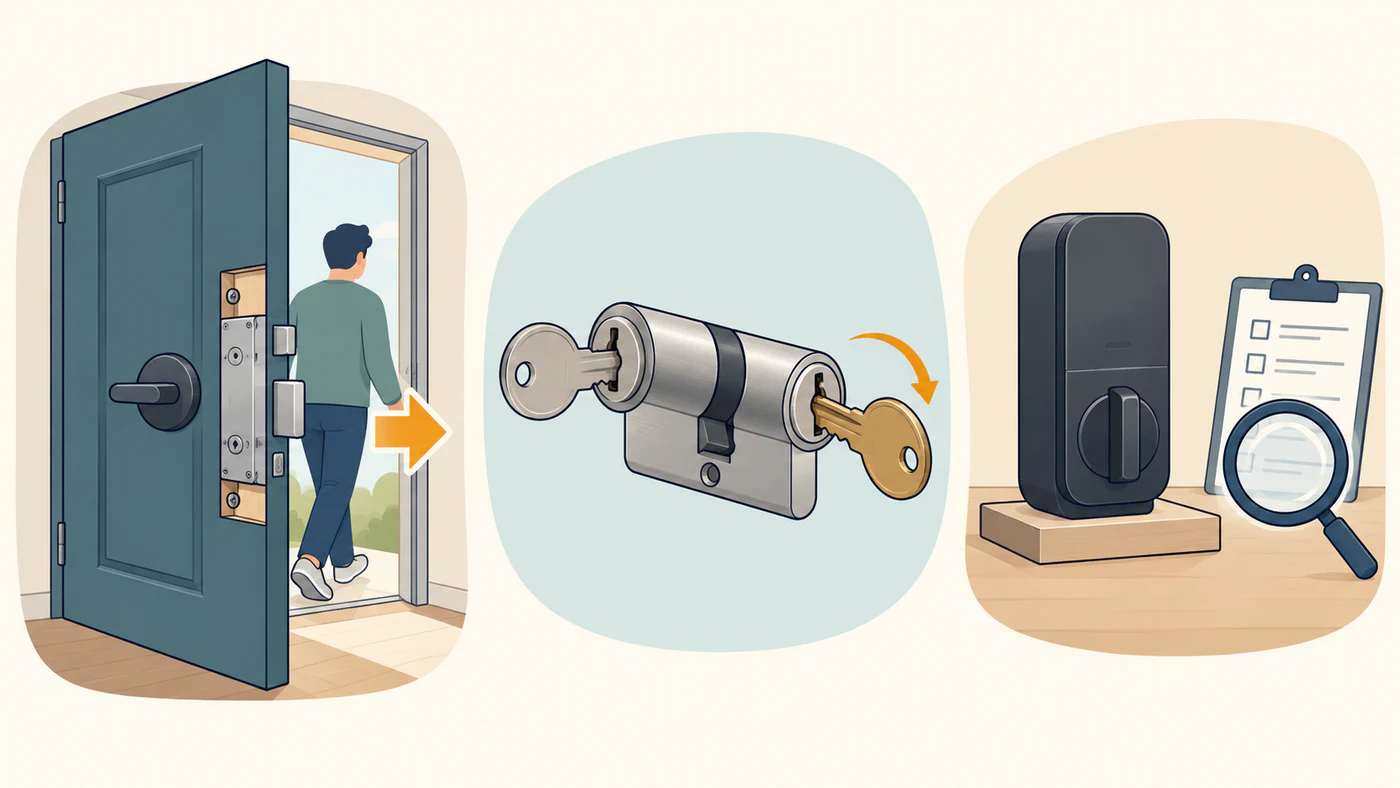
Inside release concerns the complete assembly; opposite-side key operation concerns cylinder behavior; device testing covers its stated device scope. None alone establishes the installed combination.
Secured by Design also describes DHF TS 621:2018, including corrigendum 1 as a performance and test specification for electronic door-locking devices, including electronic door furniture, locksets, and cylinders. That device-testing scope does not identify the inside-release behavior of a particular existing door after a proposed retrofit. Check the exact product and configuration separately from the installed lock assembly.
Passing one check does not answer the others. A cylinder with emergency function does not by itself prove that the door has a particular egress mode. A standard listing does not prove that a retrofit preserves that mode or fits the installed door.
Check the existing door before replacing anything
Record the lock assembly model, inside release method, cylinder and key arrangement, and normal locking sequence. Check whether the proposed smart lock changes how the inside handle, thumbturn, key, or manual override works. If you cannot verify the effect on egress, pause the change and consult the lock manufacturer and the person responsible for the building’s door requirements.
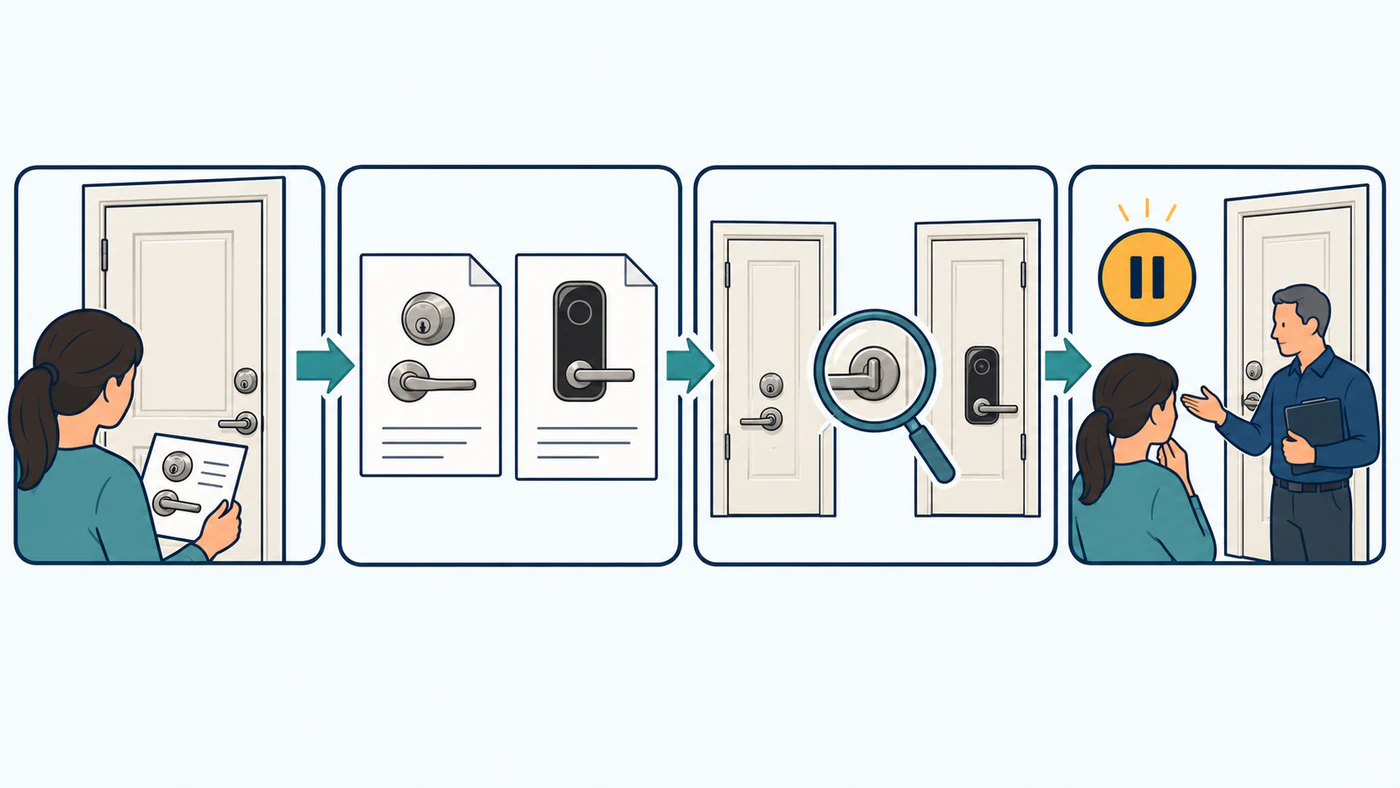
Use this as a question sequence, not a compliance test or installation procedure.
The BSI pages identify standard scope and current release information; the complete requirements were not reproduced here. This guide does not determine legal or building-specific compliance. For the cylinder side of the check, see emergency function and double clutch.
Reference material
Sources for this guide
- BS 3621 — Lock assemblies operated by key from both the inside and outside of the doorPrimary
- BS 8621 — Lock assemblies operated by key from the outside of the door and by handle or thumb turn from the inside of the doorPrimary
- BS 10621 — Lock assemblies in which the operating mode can be switched between the normal BS 8621 operating mode and a secure mode in which no egress is possiblePrimary
- Locks & Associated HardwareAuthoritative secondary