Single-Cylinder, Double-Cylinder, and Interconnected Locks
Identify which action your North American lockset requires before choosing a smart lock or retrofit.
Jump to a section
Before comparing smart locks, identify what the existing hardware does from each side of the door. A product can fit a familiar deadbolt shape but still be the wrong type for the action the door requires.
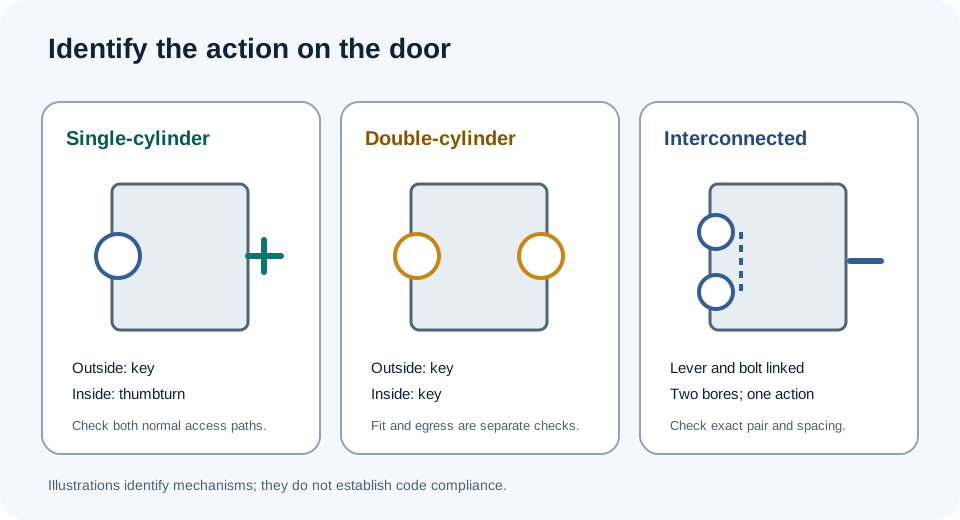
Identify the operating pattern
| Pattern | What to look for | What a smart lock must address |
|---|---|---|
| Single-cylinder deadbolt | A key operates the outside; an interior thumbturn operates the bolt. | The exact device must support this mechanism and its door preparation. Aqara describes the U400 for single-cylinder deadbolts; that scope does not extend to every deadbolt. |
| Double-cylinder deadbolt | A key operates both sides. | Confirm the exact product and opening requirements before purchase. Do not assume that a fit list or a brand label answers the egress question. |
| Interconnected lockset | A lever or knob and deadbolt are mechanically linked, so one action can retract both latch and bolt. | Check the linked action, both bores, center spacing, body clearance, handing, and the exact replacement’s instructions. It is different from installing two independent electronic locks that may overlap. |
Some products are intended for one of these patterns only. Bosma’s Aegis installation guide, for example, excludes double-cylinder, mortise, and other named mechanisms. Treat such statements as limits for that product, not as universal definitions of every smart lock.
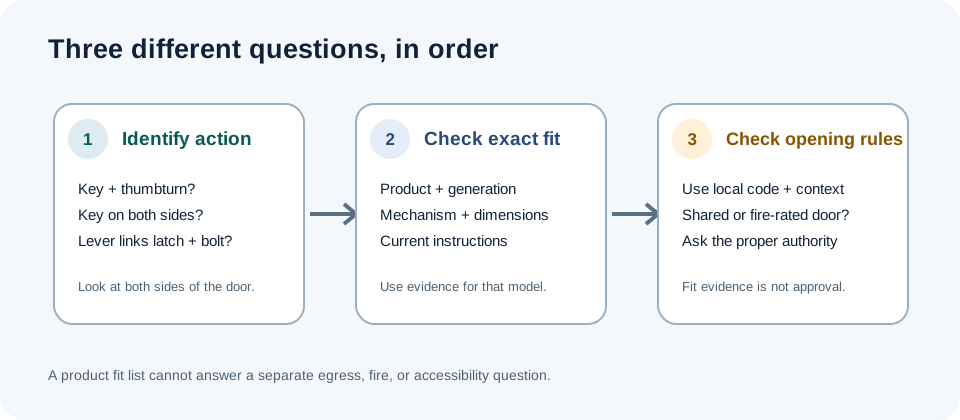
Keep fit separate from door rules
A manufacturer compatibility list answers a product-specific fit question. It does not determine whether a particular opening may use a double-cylinder lock. Building, fire, and accessibility requirements depend on the jurisdiction and how the opening is classified. The cited 2021 IRC text is a historical model-code example; the Canadian CAN-ASC-2.2 page is explicitly a draft and says not to use it for reference. Neither is a local approval for a specific door.
For a shared, accessible, fire-rated, or otherwise unusual opening, verify the applicable rule with the local authority or a qualified professional before changing hardware. For the physical measurements, use the exact-model preparation checklist; for key retention and rekeying, see the key-path guide.
Reference material