How to Answer “Does This Smart Lock Fit My Door?”
Reach a useful compatibility verdict by comparing one exact lock model with one measured door across fit, operation, and ecosystem support.
Jump to a section
A useful fit answer compares one exact lock with one particular door. “It supports Matter,” “it works with my phone,” or “the old lock looked the same” are not enough to establish compatibility. Use the manufacturer’s current instructions for the exact model and market.
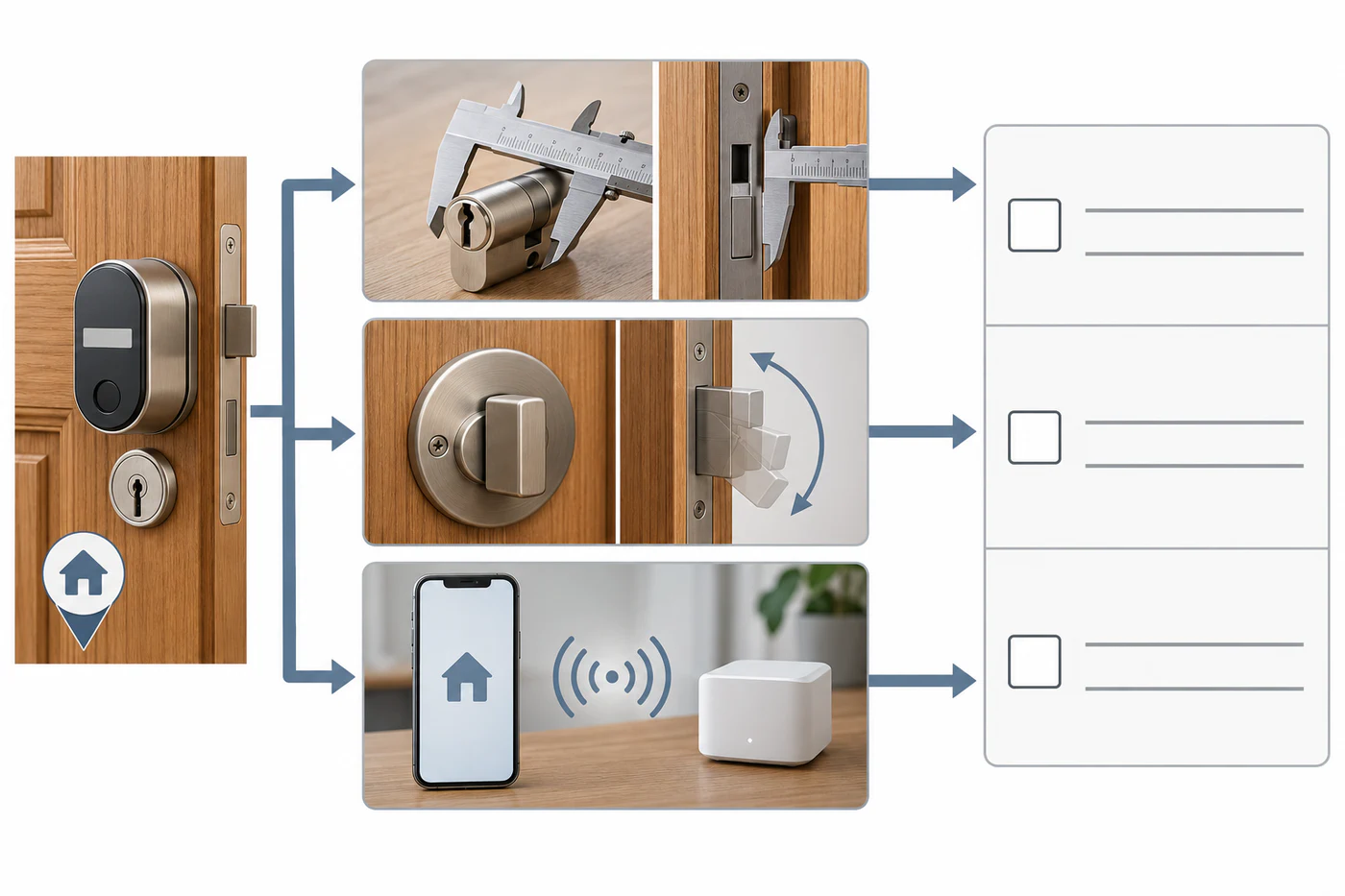
The mechanical and ecosystem rows answer different questions and should remain separate in the final record.
1. Identify the exact product
Write down the model code, generation, country or market, and package. A product family may have retrofit and replacement versions, multiple regional kits, or hardware generations with different features. If you cannot identify the model, treat the result as unknown until the label, app, receipt, or manufacturer support confirms it.
2. Compare physical preparation
Record the door and lock type, cylinder or deadbolt, backset, bore, door thickness, edge preparation, strike, and clearances required by the specific instructions. Use the manufacturer’s checker when it covers your exact market and mechanism. A listed set of dimensions is a screening boundary, not a guarantee that an unlisted frame, trim, latch, or strike will work.
3. Test the required operation
Describe what the lock must turn or retract. Check whether the door requires a key or thumbturn, a handle lift, latch movement, or a particular sequence. Verify that the device can perform the required movement with the door open before testing it closed, and follow the maker’s safe installation steps. If a mechanism or operation is not documented, do not assume that a motor can perform it.
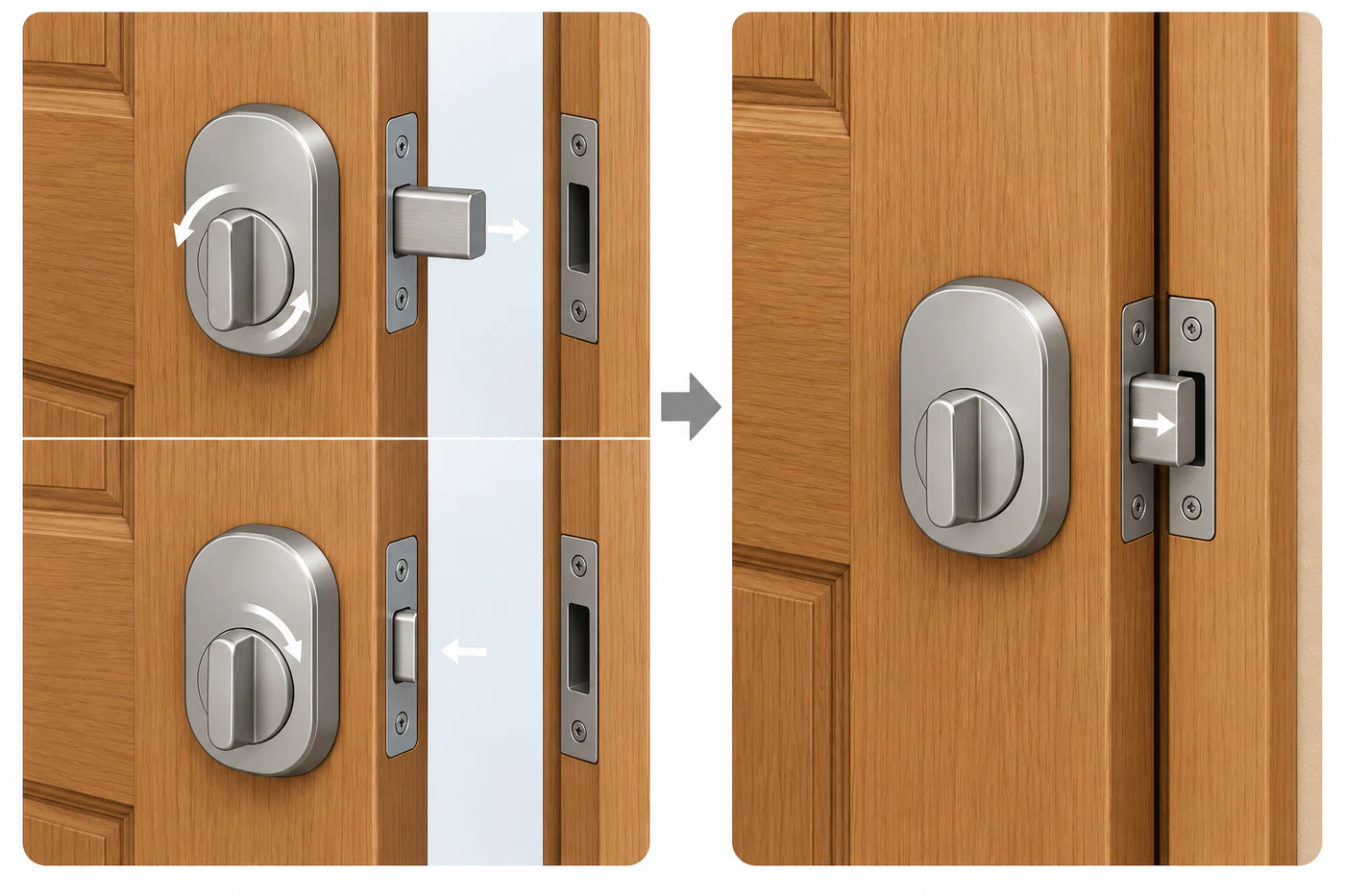
Test the required movement with the door open first, then confirm smooth alignment when closed, following the exact lock instructions.
4. Check electronics after mechanics
Confirm the generation, firmware, app, hub or controller, network, and platform features separately. For example, Thread controller requirements or generation-specific Wi-Fi features affect setup and remote access. They do not determine whether the lock fits a cylinder or deadbolt.
5. State the verdict precisely
Use a status that communicates the actual evidence:
- confirmed-compatible: the exact model and documented door conditions match, including the needed operation.
- compatible-with-accessory-or-modification: a named, documented part or permitted preparation is required.
- conditional-verify-measurements: the product may suit the mechanism, but one or more required measurements still need checking.
- not-compatible: a documented exclusion or mismatch rules out the proposed setup.
- unknown-not-documented: the evidence does not answer a necessary question.
Attach the verdict to the model code, market, and the door details checked. A statement about an Aqara U400, a Nuki Ultra Nordics, a Yale L2 kit, or a Schlage FE789 should not be generalized to another product in that family. See how to verify a model and variant, then keep the decision current using the freshness guide.
Reference material